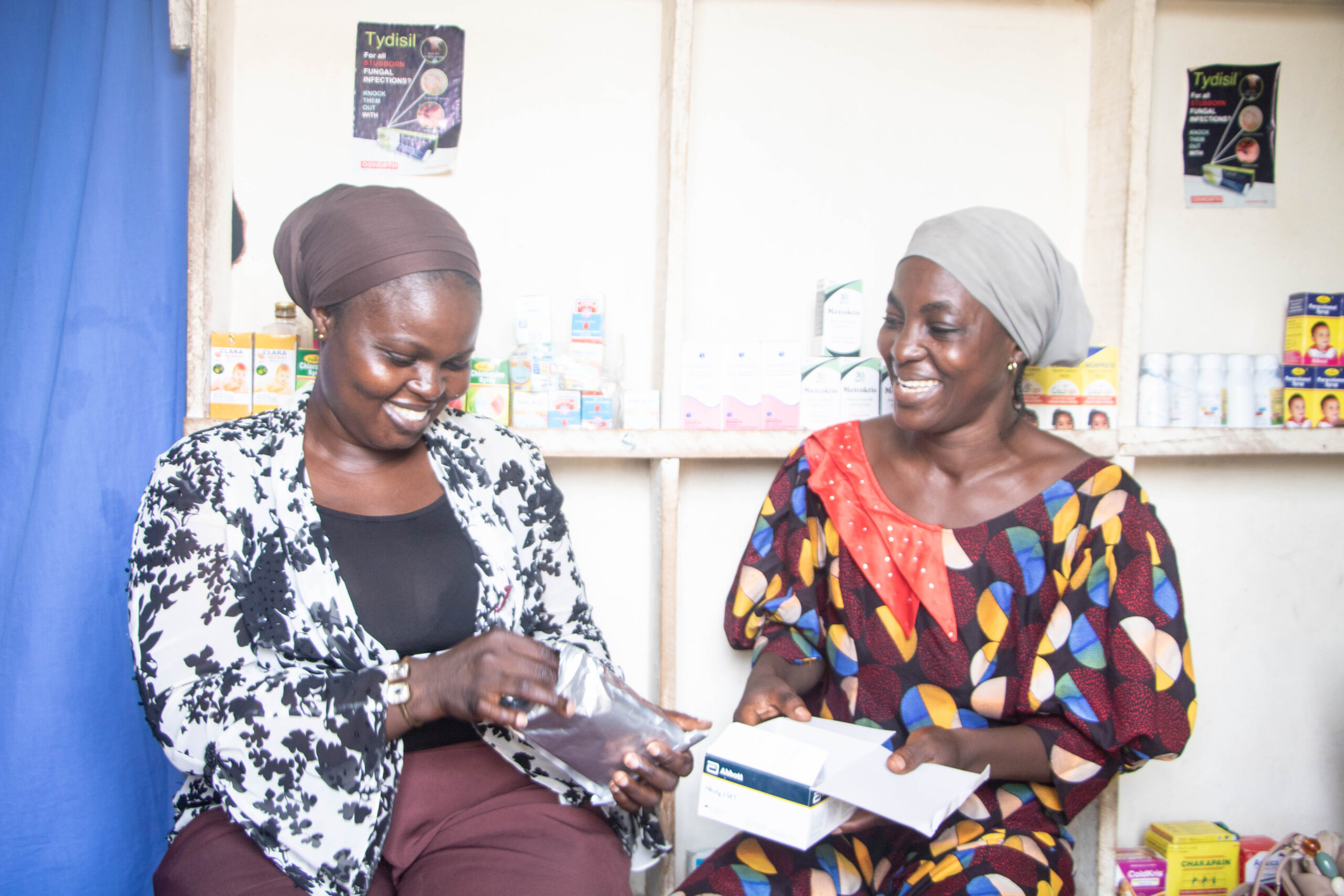
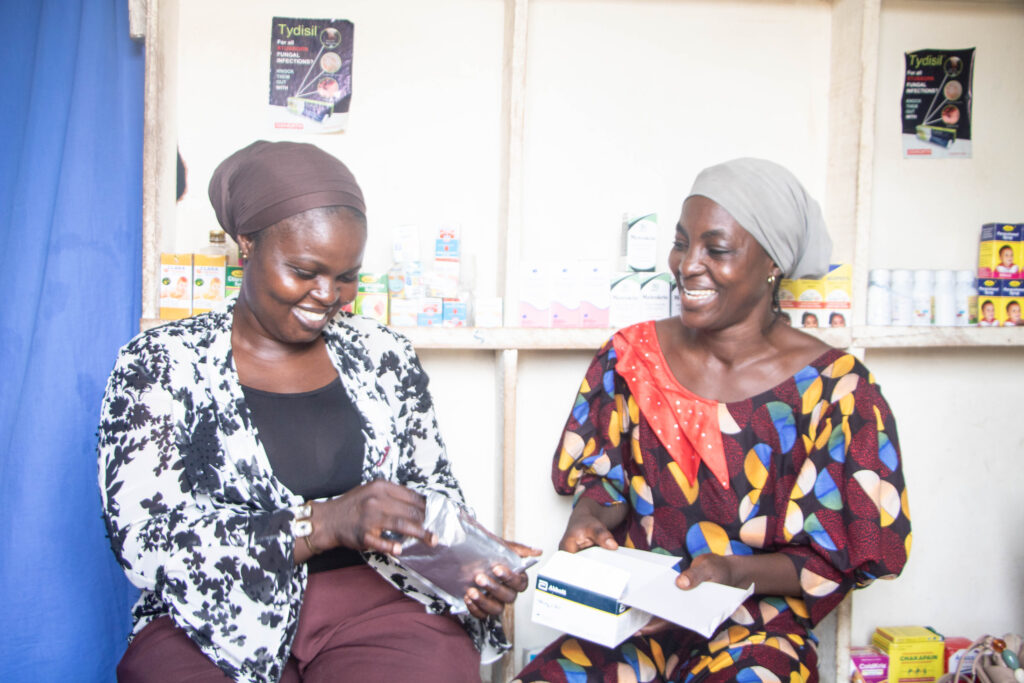
Though utilizing antenatal care services in a health facility contributes to improving maternal and child health, some women prefer to patronize the services of traditional birth attendants (TBAs) in their communities. This may be due to transportation costs, user fees at hospitals, and ease of access to TBAs amongst other reasons. According to the 2024 Nigeria Demographic and Health Survey, 56% of live births still occur at home, while only 43% take place in a health facility. Just 63% of women with a recent live birth received antenatal care from a skilled provider, and 26% received no antenatal care at all. Forty-seven percent of women cite the cost of treatment as a barrier to seeking care, and 25% cite distance to the nearest health facility.
For women living in hard-to-reach communities, nomadic settlements, and low-income households, traditional birth attendants (TBAs) often remain the first and sometimes only point of maternal care.
The Nigeria TB HIV Reach Integration and Impact Project (N-THRIP) implemented by the Institute of Human Virology Nigeria (IHVN) engages TBAs and local maternity homes to ensure that no one is left behind in the fight against mother-to-child transmission of HIV (MTCT).
With funding support from the Global Fund to Fight HIV, Tuberculosis and Malaria, IHVN builds the capacity of TBAs and supplies them with test kits for HIV, syphilis and hepatis B for testing of all pregnant women they attend to. Globally, the World Health Organization notes that without intervention, mother-to-child transmission of HIV ranges from 15% to 45% but can be reduced to below 5% with effective interventions during pregnancy, labour, delivery and breastfeeding making early identification and linkage to care critical.
A Trusted Hand in the Community: Adama’s Story
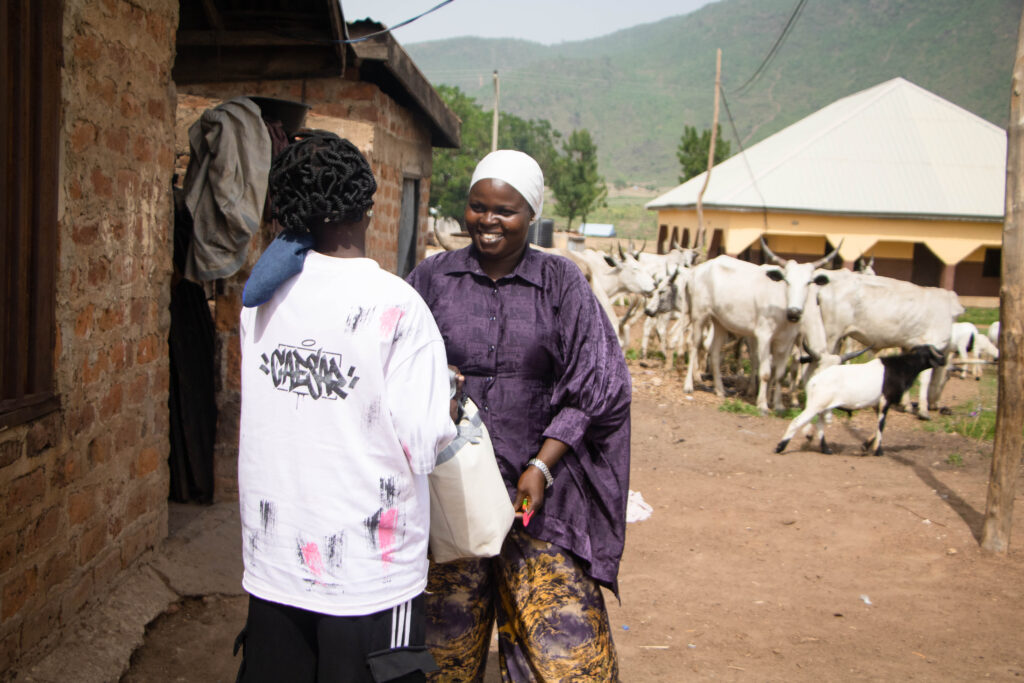
Adama Mohammed, who lives in Karshi, in the Federal Capital Territory (FCT) is one of the 6,233 TBAs engaged by the project in 36 states and the FCT. She says that she has gained counselling skills and the capacity to test for syphilis since her engagement in the project. She constantly interacts with a mentor mother for referrals of HIV positive pregnant women from her center to nearby health facilities for care.
Adama takes an average of 30
deliveries monthly, most of which are in the homes of women in hard-to-reach communities and nomadic settlements. She appreciates the support from GF-NTHRIP because it protects the health of mothers, their babies as well as her health as a TBA.
“I have been a TBA for close to 17 years. I move around with my delivery bag and respond to calls all day and night. Some pregnancies are difficult and I am relieved that I can contact the hospital and even take the women there when the need arises. Many communities see me as a trusted and capable hand because of the safe deliveries that I have handled. They do not hesitate to listen to my counsel when I refer them to the hospital,” Adama reveals.
Community Trust to Clinical Care: Lotan’s Journey
One of the pregnant women referred by Adama, is 22-year-old Lotan, who walked into her center with a friend on one of the Saturdays in January 2026.
“She was six months pregnant for her first baby. As usual, I tested for HIV, syphilis and Hepatitis B. Her HIV test result came back positive. I quickly called the mentor mother, Jummai, who lives close by to come and accompany her to a comprehensive facility for confirmation, subsequent care, and treatment. She is always ready to assist, “the TBA explains.
At General Hospital Karshi, the test confirmed Lotan’s HIV positive status. Lotan was counselled and immediately commenced on antiretroviral treatment to prevent mother-to-child transmission of HIV. She also commenced Isoniazid Preventive Therapy (IPT) for the prevention of tuberculosis in pregnant women.
It was not easy for Lotan to accept her HIV positive status and take medications without constant follow-up and support from both the TBA and the mentor mother. The mentor mother is a symbol of hope for Lotan.
“I see how beautiful she looks, and I tell myself that if this woman can live well, then I can too. HIV is not a death sentence,” Lotan says.
Lotan narrates that the TBA was her preferred option because her neighbour and friend recommended it and because she could not afford transportation and hospital costs for antenatal care.
“The community where I live is behind a hill. To get to the General Hospital in Karshi, I’ll need to take a motorcycle for ₦2,500. This means that I’ll have to spend ₦5,000 for every trip. When I calculated the costs, I realised that I would not be able to afford approximately ₦50,000 for transportation and hospital fees for antenatal care visits alone,” she adds.
A Network of Support
The support that Lotan receives from the TBA, mentor mother, hospital staff and very importantly, her husband has convinced her that every antenatal care visit is important for her and the baby’s health.
Lotan also received a Mama Pack (delivery kit) from the NTHRIP project. The kit is given to all pregnant women living with HIV identified through the project – it has essential items for delivery such as mackintosh, saniarty pads, olive oil, Menthylated Spirit etc.
One of Lotan’s joys is the safe delivery and HIV negative result of her baby boy in May 2026.
Program Impact: Scaling a Community-to-Clinic Model
IHVN Senior Programme Manager for the GF-NTHRIP Project, Dr. Adebayo Opeyemi, states that between January 2023 and April 2026, 60,733 HIV free babies have been born with support from the project in the 36 states and Federal Capital Territory.
“GF NTHRIP is fundamentally reshaping how PMTCT services are delivered across Nigeria. Rather than waiting for women to present at health facilities, the project brings lifesaving services directly into communities, ensuring that no pregnant woman is left behind, regardless of geography or circumstance.”
Partnerships Behind the Progress
IHVN implements the project in collaboration with sub-recipients across the country and with the technical oversight of key government stakeholders, including the Federal Ministry of Health and Social Welfare (FMoHSW), the National AIDS and STDs Control Programme (NASCP), the National Agency for the Control of AIDS (NACA), the National Tuberculosis, Buruli Ulcer and Leprosy Control Programme (NTBLCP), the Network of People Living with HIV and AIDS in Nigeria (NEPWHAN), and a broad network of community-based organisations (CBOs).
In the FCT, Kogi, Nasarawa, Ekiti, Kwara and Rivers states, IHVN partners with the Association of Family and Reproductive Health (ARFH) as sub-recipient to implement the project.
Looking Ahead
For women like Lotan, the project is closing the distance between community trust and life-saving clinical care.
Dr Adebayo notes that, “By equipping TBAs to test, counsel, and refer and by pairing them with mentor mothers and health facility teams GF-NTHRIP is helping ensure that pregnancy does not become the moment when women in underserved Nigerian communities are lost from HIV services. With effective PMTCT interventions, mother-to-child transmission of HIV can be reduced/ eliminated, making early identification and sustained linkage to care essential to ending paediatric AIDS in Nigeria.”
Sources Referenced
- Nigeria 2024 Demographic and Health Survey Summary Report — DHS Program: https://dhsprogram.com/pubs/pdf/SR294/SR294.pdf
- Elimination of Mother-to-Child Transmission (EMTCT) — WHO AFRO: https://www.afro.who.int/health-topics/hivaids/emtct
- Mother-to-Child Transmission of HIV — WHO:
4. HIV Initiative ‘Prevention of Mother-to-Child Transmission’ Saves Exposed Infants — WHO AFRO: