• Working Hours - Mon - Thu: 8:00 - 17:00; Fri: 8:00 - 14:00
What are you looking for?

Author Archives: admin

IMPACT Malaria Project Reduces Ondo Malaria Prevalence

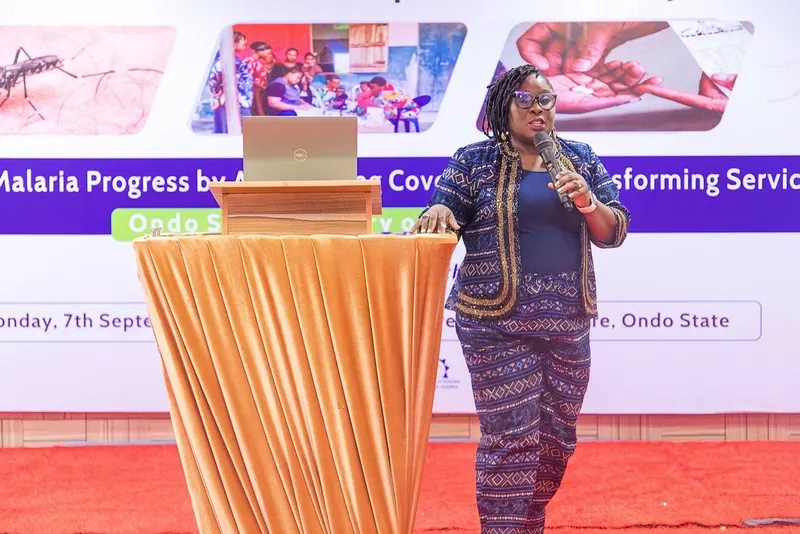
Stakeholders in the health sector in Ondo State have gathered to mark the close of the malaria component of the Immunization Plus and Malaria Progress by Accelerating Coverage and Transforming Services (IMPACT) Project in Akure. The project was implemented from November 2024 to October 2025 and resulted in a reduction of malaria prevalence in the state from 27% to 13%.

At the event, Ondo State Commissioner of Health, Dr. Banji Awolowo Ajaka lauded the efforts of the Institute of Human Virology Nigeria (IHVN) in the implementation of the project. 

“We are happy with the progress in the implementation of both the malaria and immunization program. IMPACT project has been impactful in Ondo State. The overall project objective was to reduce under five mortality by 40%. As it is today, Ondo State has surpassed that. The malaria prevalence rate has reduced from 27% to 13%. For us, that means the project has been impactful.

We want to reduce the prevalence to zero. We will continue to collaborate with Non-State Actors, World Bank and partners to achieve this objective.,” he said.

IHVN Chief Operating Officer and Managing Director, Dr. Charles Olalekan Mensah said that the massive support by the state government provided the enabling environment for the project’s success.

“We were able to reach all the mile stones because of the strong leadership of the state. The World Bank invested ₦1.5 billion on the malaria component of the project and the project was implemented in all the local governments in the state. I would say it has been a well spent resource.”

Stakeholders at the event including the World Bank, State government health agencies, the National Malaria Elimination Programme (NMEP), health specialists, community based organizations and project beneficiaries commended the achievements of the project and called for sustainability of the project’s gains.

IHVN Chief of Party of the IMPACT Malaria Project, Dr. Temitope Kolade explained that the project provided malaria services in 203 health facilities in the state.

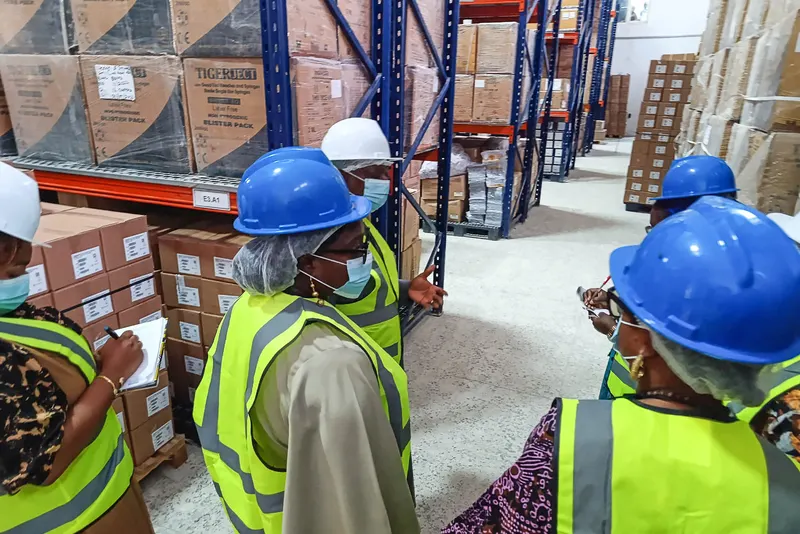
“The goal of the project was to promote uptake of malaria prevention & treatment services in high malaria burden rural areas. IHVN scope of work included managing logistics and distribution of Long-Lasting Insecticide Treated Nets (LLIN), employing strategies to ensure that families hang-up and use LLINs, improving the management of malaria, improving household malaria prevention behaviors, increasing household use of appropriate malaria care-seeking and treatment and distribution of other malaria control commodities,” she said.

Dr. Kolade said that through the project, the  Institute Improved the availability and quality of malaria services at primary health centers and created awareness of malaria preventive and treatment services in communities.

“A total of 519 frontline health workers and ad hoc staff were trained to enhance malaria diagnosis and treatment across supported facilities. The training improved the use of Rapid Diagnostic Tests and  adherence to treatment guidelines. We also organized training for 350 community health extension workers and volunteers. These health workers and volunteers were attached to health facilities and equipped to drive malaria testing, and treatment services at the community level,”

According to her, “Eight community-based organizations were engaged to lead effective malaria services demand generation and delivery at the community-level thus leading to increased uptake of malaria information/services.”

She explained that innovative strategies such as school-based outreaches, collaboration with traditional birth attendants to reach women seeking care in informal settings and engagement of stakeholders at the community level to participate in the program contributed to the project’s success.

The Chief of Party stressed  that community-based implementation and social behaviour change communication remains one of the most effective way of improving coverage and uptake of any health products and/or services.

The event also featured presentation of awardsto outstanding community based organizations, community health extension workers, health facilities and volunteers.

ISS 2026: Hackathon Promotes Innovative AI/ML Public Health Solutions

To facilitate the practical application of Artificial Intelligence and Machine Learning (AI/ML) to the development of simple, scalable digital solutions for public health challenges, the International Research Center of Excellence (IRCE) at the Institute of Human Virology Nigeria (IHVN) has organized a hackathon.

The one day novel event was one of the activities hosted as part of the 4th IRCE Annual Scientific Symposium in Abuja.

Two teams of six each participated in identifying AL/ML applications to; infectious disease screening using structured clinical and programmatic indicators andclinical documentation using a hybrid approach.

The winning team bagged a ₦300,000.00 while the runner-up team went home with ₦150,000.00

At the event, IRCE Executive Director, Prof. Alash’le Abimiku emphasized the importance of leveraging data from government and other relevant sources to develop innovative solutions to infectious diseases and pandemics that disproportionately affect Africa and have implications for the global community.

“The hackathon is a platform for our young and early career researchers to try new AI innovations,” she said.

Prof Abimiku is also the Contact Principal Investigator for the INFORM Africa project which sponsored the hackathon.

She highlighted the various INFORM Africa pilot activities aimed at addressing infectious diseases, strengthening data-driven decision-making and improving pandemic preparedness.

INFORM Africa, brings together a multisectoral and multidisciplinary group of investigators with complementary expertise in data science, infectious disease epidemiology, geospatial statistics and agent-based modeling, community-wide and health surveillance systems, infectious disease medicine, immunology, mobility epidemics, bioinformatics and molecular evolution to collectively work on emerging pandemics like SARS-CoV-2   and their relationship with HIV-1 in Nigeria and South Africa.

INFORM Africa Research Project is a collaboration between the Institute of Human Virology Nigeria (IHVN) and the Centre for the AIDS Programme of Research in South Africa (CAPRISA), their partner universities in the United States and South Africa, as well as an industry collaborator from Zambia (AKROS). 

ISS 2026: Researchers Meet on Utilizing Technology to Address Public Health Challenges

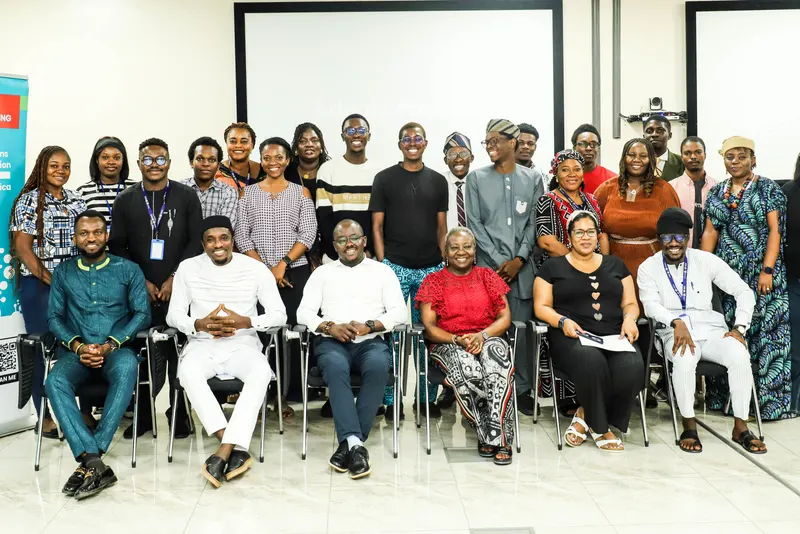
The International Research Center of Excellence (IRCE) at the Institute of Human Virology Nigeria (IHVN) has hosted the 4th International Scientific Symposium (ISS 2026), which brought together over 250 researchers, scientists, public health specialists, health business leaders and policy makers to deliberate on utilizing innovative technologies to address public health challenges.

ISS 2026 Chair and IRCE Executive Director, Prof. Alash’le Abimiku said that the gathering was a forum to bring together stakeholders to discuss opportunities that Artificial Intelligence (AI) and Machine Learning (ML) offers in making progress despite challenges in funding public health research.

“We need to come together to discuss how to utilize innovative tools, the ethics we need to be able to do that, and the policies we have about sharing data. The call to action is that as researchers, we understand the new opportunities that artificial intelligence has presented us.”

She stressed the need for a fusion of efforts between young and established researchers to bring the knowledge of AI and the experience in public health into areas requiring AI application to address public health challenges locally.

“As a collective scientific body, we need to collaborate to support the Government of Nigeria as we understand the national data available and the communities that we protect.”

ISS 2026 Key Note Speaker, one of Africa’s foremost Virologists, Prof Oyewale Tomori, explained that there is a need to take advantage of technology to quicken research processes.

“We can do faster with AI and turn this country around, if we take advantage of all the information available. Efforts are being made by the government but we can get better results for all the efforts they are putting by using AI, not just in disease surveillance but in every aspect even in the social structures and budgeting.”

Prof Tomori added that, “Sometimes, we focus on health, but there are other issues around health like good water supply to reduce water borne diseases, good road infrastructure for quick access to services. This is what AI brings together to give a better option.”

Also at the symposium, a representative from the Presidential Initiative for Unlocking Healthcare Value Chain (PVAC), Dr. Saidu Saad, added that, “emerging technologies are playing a big role, we need to understand how to use it appropriately to help us with sustainable healthcare research and funding.”

The two-day symposium held at the IHVN Campus in Abuja from 31st August to 1st September 2026. It featured plenary sessions, panel discussions, abstract presentations, and networking around the theme, “Shaping the Future of Public Health Research: Sustainable Funding, AI/ML and Innovation.”

IHVN Celebrates August 2026 Employees of the Month

In fostering an excellent work culture and staff performance, the Executive Management of the Institute of Human Virology Nigeria (IHVN) has initiated the “Employee Recognition Awards” to recognize “Employees of the Month” and “Employee of the Year.”

According to Dr. Olu Alabi, the IHVN Director of Finance and Administration, this recognition encompasses overall employee performance in areas such as dress code, innovation, teamwork, productivity, efficiency, leadership, interpersonal skills, punctuality, and adherence to company values and principles, among other factors.

For August 2026, IHVN celebrates Temitope Olugbo, Emmanuella N. Emmanuel, Oreoluwa Fawehinmi, Olubunmi Karen Kehinde, Panji Albert Daser, Ene Olong, Dooshima Solomon Jiwul, Haruna Sabo and Ekarika Godwin, whose performance stood out in their teams.

Hearty cheers to our August star performers!