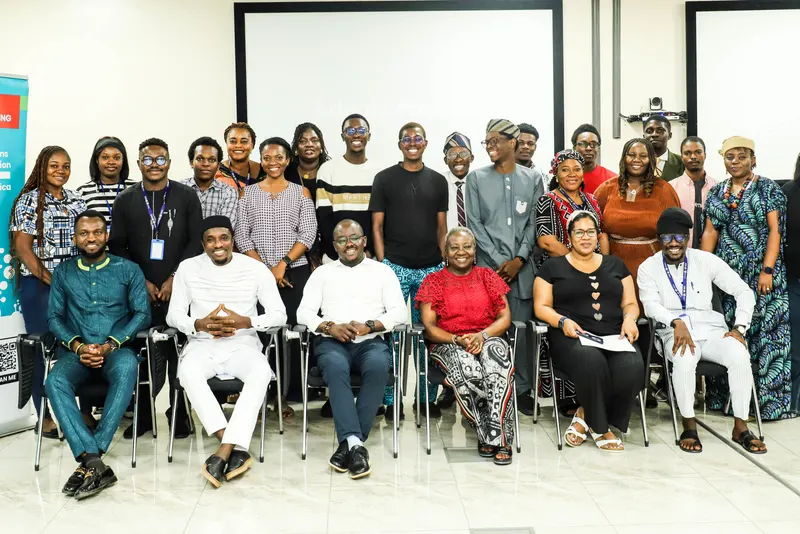
In fostering an excellent work culture and staff performance, the Executive Management of the Institute of Human Virology Nigeria (IHVN) has initiated the “Employee Recognition Awards” to recognize “Employees of the Month” and “Employee of the Year.”
According to Dr. Olu Alabi, the IHVN Director of Finance and Administration, this recognition encompasses overall employee performance in areas such as dress code, innovation, teamwork, productivity, efficiency, leadership, interpersonal skills, punctuality, and adherence to company values and principles, among other factors.
For May 2026, IHVN celebrates Anthony Nwokoma, Douglou Samuel, Napoleon Loveth Akayi, Barine Mark Peter Ojonimi Emmanuel, Amina Osuwa, Eli Asabar Petong, Jwan Panshak and Dickson Egharevba, whose performance stood out in their teams.
The Institute of Human Virology Nigeria (IHVN) has joined the Global Fund to Fight AIDS, Tuberculosis and Malaria, UNDP and the Government of Nigeria to convene a National Consultative Workshop to discuss ways to strengthen interventions against Intimate Partner Violence (IPV) and Gender-Based Violence (GBV) in Nigeria.
The workshop, which held in Abuja, attracted representatives from the Ministries of Health, Justice, the National Human Rights Commission, UN in Nigeria, and Commissioners of Health and Justice. Also in attendance were civil society organizations, the media, policy makers and program implementers.
At the event, stakeholders stressed the need for practical, evidenced-based actions to improve health as well as social and judicial services to address GBV and IPV in the country.
Head of HIV at The Global Fund, Dr. Izukanji Sikazwe stated that the Global Fund is committed to partnerships to address HIV, TB, and malaria through the Global Fund Grant Cycle 8 (GC8).
“This meeting is a time to talk about HIV and the structural and social barriers to reaching the end of HIV. My hope is that we move from discussion to action. It matters deeply for us if we are to reach the 2030 targets to address these challenges.”
Dr. Sikawe explained that the GC8 includes IPV as an essential activity under HIV programming.
“For the first time, we included Intimate Partner Violence and Post-Rape Care as essentials. This is an opportunity for us to ensure that we prioritize our limited resources to interventions that will shift the epidemic.”
The workshop featured plenary sessions, panel discussions on the current realities of IPV and GBV in the country. It also featured deliberations on key steps and practical solutions to address challenges identified.
Representative of the Federal Ministry of Health, Dr. Charles Nzelu said that evidence has shown that IPV/GBV prevents HIV testing.
“This is a very serious issue. I am sure that under GC8, this will be captured. Nobody has the right to violate the rights of others.”
According to HIV Project Director Global Fund Nigeria TB HIV Reach Integration and Impact Project, Dr. Olayemi Olupitan, the Institute will continue to collaborate to address IPV/GBV in the country.
“Working together with the Government of Nigeria, NEPWHAN and Community Rights Advocates have been engaged in spotting cases within the community and helping to refer individuals to Global Fund supported sites where they can access vital services.”
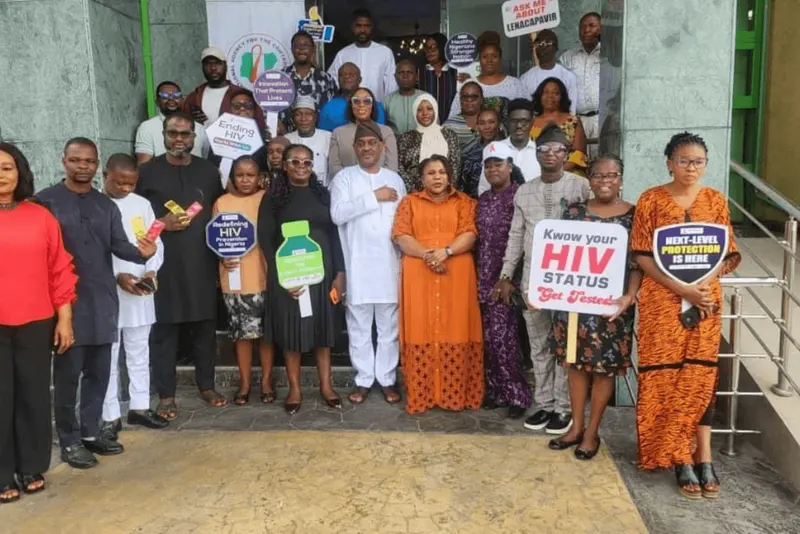
Stakeholders at the workshop pose for a group photograph. Panelists discuss challenges affecting survivor-centered service provision, referral pathways and access to justice.Head of HIV at the Global Fund, Dr. Izukanji Sikazwe addressing the media the IPV/GBV National Consultative Workshop
The International Research Center of Excellence (IRCE) at the Institute of Human Virology Nigeria (IHVN) is inviting researchers, scholars, public health practitioners and professionals to share innovative research findings, experiences and best practices at the upcoming 4th Annual Scientific Symposium.
Abstracts related to the symposium’s theme, “Shaping the Future of Public Health Research: Sustainable Funding, Artificial Intelligence/ Machine Learning and Innovation” can be submitted at bit.ly/ISS2026abstractsubmission before 30th June, 2026.
Interested researchers can submit abstracts under the following sub-themes:
Sustainable Funding for Public Health and Research
Research Innovation and Integrated Technologies
Capacity Building, Stakeholder Engagement and Policy Innovation in Global Health
Artificial Intelligence and Machine Learning
Pandemic Preparedness and Health Security and
Implementation and Implementation Science.
The 4th IRCE Annual Scientific Symposium is to hold from 31st August to 1st September 2026 at the IHVN Campus in Abuja.
The Institute of Human Virology Nigeria (IHVN) has commenced registration for the 4th International Research Center of Excellence (IRCE) Annual Scientific Symposium.
Researchers, policy makers, public health experts, health workers and student, within and outside Nigeria are invited to register for the symposium to hold from 31st August to 1st September, 2026 at the IHVN Campus in Abuja.
This year, the symposium is themed, “Shaping the Future of Public Health Research, Sustainable Funding, Artificial Intelligence/Machine Learning and Innovation.”
Early Bird registration is open until June 30, 2026, and offers a 10% discount. Organizations or groups registering multiple participants can receive an additional 5% group registration discount.
The symposium has been held yearly since 2023 with researchers exploring themes such as “Expanding Partnerships to Sickle Cell Disease and Cancer Research,” “Addressing Local Health Challenges through Quality Research and Partnerships” and “Combating Viral Threats Through Public Health Response and Research.”
Our Lady of Apostles Hospital, Jos, a Faith-Based Organization (FBO) is one of the private providers providing tuberculosis (TB) and HIV services with support from Leprosy and Tuberculosis Relief Initiative (LTR), a sub-recipient of the Institute of Human Virology Nigeria (IHVN)
With funding support from the Global Fund to Fight HIV, TB and Malaria, the hospital provides tuberculosis services.
For the hospital, the fight against tuberculosis (TB) is not just clinical, it is deeply personal. At the heart of this effort is Emmanuel James, a registered nurse and TB DOT Officer whose journey into TB care began unexpectedly but has since become a calling.
“I actually wanted to work in the Intensive Care Unit,” Emmanuel recalls with a smile, but because I had taken a basic TB course, I was moved to the TB Unit. “I was told that the unit had never had a nurse with a TB background before. I have found joy in helping patients get better.”
Over the past four years, Emmanuel has dedicated himself to ensuring that TB patients not only receive treatment but also complete it successfully. His role goes beyond administering medication. He supervises patient care, leads infection prevention efforts, and ensures that both patients and healthcare workers remain safe.
A typical day for Emmanuel is anything but routine. Yet, what stands out most to him are the small victories. “I like it when patients come in and say, ‘I feel better today.’ That means everything,” he says. “Our work is built on empathy. We listen to our patients and help them find solutions that work for them.”
This patient-centered approach is a cornerstone of the success of the Global Fund tuberculosis program in Nigeria. It means that rather than strictly enforcing guidelines, Emmanuel adapts treatment plans to fit individual lifestyles while still staying within medical standards.
“We’re not just book-oriented; we’re patient-centric,” he explains. “If a patient says 6 a.m. works best for their medication, we help them set reminders, so they don’t miss it. When patients feel heard, they are more committed to their treatment.”
One of the biggest challenges his patients face is not the medication itself, but everyday realities like hunger and transportation. “Some patients skip their drugs because it increases their appetite, and they don’t have enough food,” he shares. “Others struggle with transport costs. So before starting treatment, we look at how far they live and try to make things easier for them.”
Despite these challenges, Emmanuel has witnessed remarkable stories of resilience. One case that stands out involved a patient who repeatedly tested positive for TB even after completing treatment. “He was worried because he kept hearing TB is curable, yet he wasn’t getting better,” Emmanuel recounts.
“After further testing, we discovered he had drug-resistant TB. He went through another round of treatment, and today, he’s completely fine. He still checks in to say he’s doing well. That kind of outcome is incredibly fulfilling.”
Beyond physical healing, Emmanuel has also seen how TB treatment can restore lives. He remembers a young woman who faced both illness and rejection from her family. “She was very sick and emotionally broken because her family had abandoned her,” he says. “We worked with her, counseled her, and even tried to reconnect her with her family. It took time, but after about three months, they accepted her again. That was when we truly saw her recover not just physically, but emotionally. Today, she’s doing well in her business and with her family.”
Due to the commitment of health care workers like Emmanuel, the Global Fund Nigeria TB-HIV Reach, Integration and Impact Project (N-THRIP) project has identified more than 237,000 individuals with tuberculosis including 85, 565 children and 3,038 people with drug-resistant tuberculosis between January 2024 and December 2025.
For Emmanuel, success is not measured in numbers but in transformation. “When I see a patient gain weight, stop coughing, and smile again that’s success,” he says. “Even when they come in sad, I want them to leave feeling better.”
Emmanuel’s message to anyone starting TB treatment is simple but powerful: “Take your medication as directed and don’t be afraid. TB is curable. We’re here to support you every step of the way.”
And to the wider community, he emphasizes prevention: “If we all practice basic measures like proper cough etiquette and early testing, we can reduce the spread. Prevention is always better than cure.”
Through compassion, innovation, and unwavering commitment, thousands of health care workers across the country are contributing to the fight against tuberculosis in Nigeria.
IHVN and its sub-recipients like LTR continue to provide support and mentorship to ensure that prevention, treatment and care services for tuberculosis are provided.
Nurse Emmanuel James, a Nurse and DOT Officer at Our Lady of Apostles Hospital, Jos